
Portable Generator Grounding
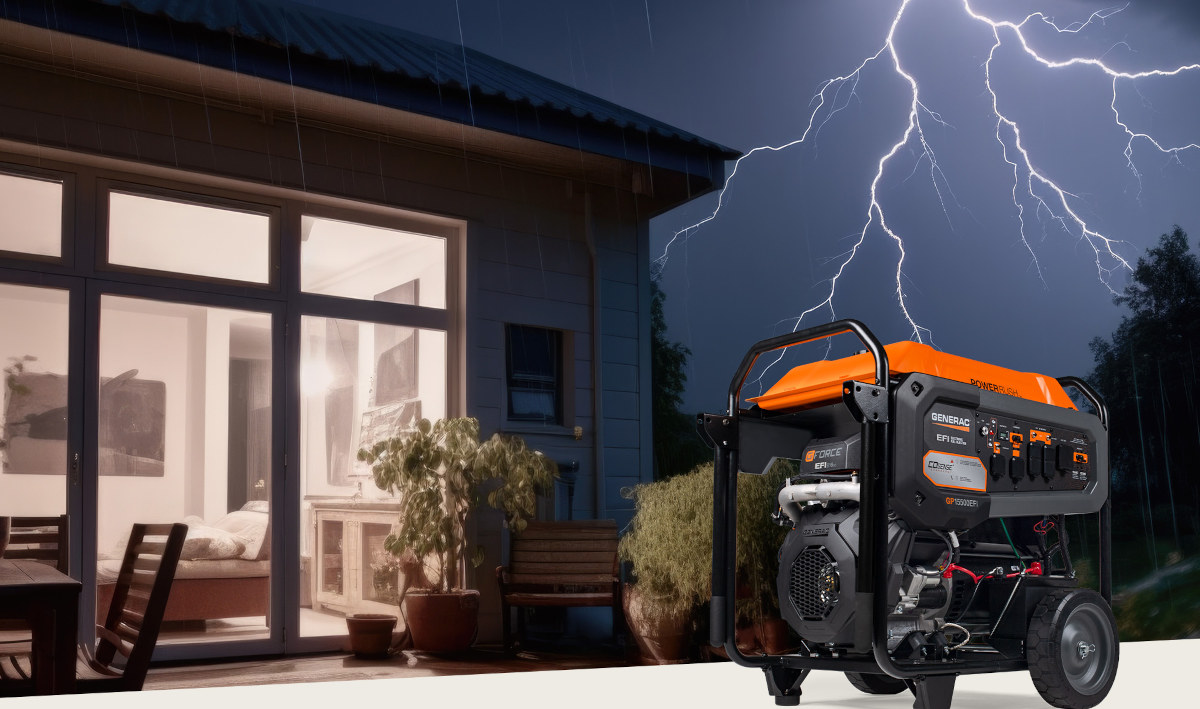
Portable generators provide power wherever you need it. They go on camping trips, power up tailgate parties and picnics, run power tools and equipment on job sites, and supply critical and essential circuits or appliances during a power outage. They come equipped out of the box to serve a wide range of applications, and range in size from small camping friendly generators to enough power for a mid-sized home or power tools for multiple trades on a construction site.
On forums, social media, and websites of all kinds, the need for a generator ground is an often debated topic that is too often misunderstood. Part of the problem stems from users relating their own experience without understanding how a single small detail can make a big difference.
Portable Generator Grounding is a safety measure, but done incorrectly or for the wrong reason, can pose additional hazards.
This article relies heavily on the National Electrical Code, OSHA guidelines, and manufacturer recommendations. Always check your owners manual for specifics and don't be afraid to reach out to the manufacturer's customer service center for clarification and guidance.
Portable Generator Buyer Guide
Portable Generator Grounding
Ground usually refers to the earth. A grounded electrical system directs stray currents into the Earth. Another term for grounding is earthing.
Example: An appliance has a metal enclosure. If a wire inside the appliance works itself loose from its terminal or breaks and the end of the wire touches the metal enclosure, the enclosure becomes energized and is now a shock hazard. You come along and put your hand on the appliance and get a shock ranging from mild discomfort to serious burns or irregular heartbeat.
However, if a wire connects the metal enclosure to a ground rod driven into the earth, the electrical current now has a safe and easy path around your body, and you won’t get a shock. If it’s a complete short, the circuit breaker will trip, eliminating all danger.
Most systems require a single ground for a very good reason. If you have two or more grounding electrodes (ground rods) separated by any distance, the space between them sets up a difference in potential (volts), when the potential of ground should be zero. If the distance is significant, the potential difference, or voltage, could also be significant. Multiple grounds rods should connect to make them a single grounding electrode.
Therefore, it is important to ensure that when you ground a generator, you’re doing it for the right reasons in the right way.
Portable Generator Safety Rules and Guidelines
Ground-Neutral Bonding
Residential service in North America uses two 120-volt lines (L1 and L2) and a neutral line (N). Voltage measured from either L1 or L2 to N is about 120 volts. Voltage measured from L1 to L2 is 240 volts. That is how we get 240 volts in North American homes. We also have a ground wire (G). As discussed in the previous section, ground directs stray currents into the Earth.
In a 240-volt appliance, L1 and L2 act as returns for each other. 120-volt appliances use either L1 or L2 and N, where N serves as the return for the hot wire. Some appliances use a combination of 120 and 240 volts. These appliances always have a neutral. The neutral carries any current imbalance between L1 and L2. If L1 is carrying 8 amps, and L2 is carrying 10 amps, the neutral carries the difference of 2 amps while L1 and L2 are the returns for the remaining 8 amps.
Ground wires should never carry current during normal operation. They are a safety-only conductor.
The National Electrical Code requires a neutral-ground bond (connection) in residential wiring at one location only—usually within the main panel or main service disconnect. This prevents significant potential differences between neutral and ground, even though neutral is a current-carrying conductor. Because of this connection or bond, the NEC officially designates the neutral wire in a 120-volt circuit as the grounded conductor, meaning it is connected to ground.
Generator Neutral-Ground Bond
If you own or are considering the purchase of a portable generator, it’s important to know whether the manufacturer bonded neutral and ground or left it floating.
In a generator, the metal frame is the ground. Bonding the neutral to the metal frame serves a similar purpose to the bond in your main service panel or main service disconnect. Some generators have a floating neutral, meaning it lacks a connection to ground. Many inverter generators have this configuration.
When to Ground or Not Ground Your Portable Generator
The type of generator and the application determine whether it requires grounding. Always check the owner's manual to determine if the specific application requires a grounding electrode (ground rod.)
It is always a good practice to consult with a qualified electrician who understands the nuances of the National Electrical Code and generator safety.
Plug Appliances or Power Tools Directly in Generator Outlets
The design of most generators allows for this scenario out of the box. For most items, it should work just fine without grounding your generator.
If your appliance checks for ground and won’t operate without a Neutral-Ground bond (floating neutral generator), purchase a grounding plug. A grounding plug has the neutral prong connected to the ground prong. Some generators allow you to add or remove the neutral-ground bond. Check your owner's manual.
Home Backup with Transfer Switch and Generator Neutral Bonded to Frame
A 4-wire cable runs from your generator’s 120/240-volt outlet to an inlet box. The cable has wires for L1, L2, N, and G. The inlet box extends all four wires to the manual transfer switch. When you’re using the generator to power the house, the transfer switch disconnects the main service panel and connects the generator. The HomeLink Transfer Switch is a 3-pole manual transfer switch that transfers the hot wires (L1 and L2) and neutral (N) from the utility to the generator. The circuits in the house that are not served by the transfer switch remain unenergized.
Because the transfer switch transfers the neutral from the main panel to the generator, it effectively removes the neutral-ground bond in the main panel, and the generator becomes a separately derived system. For safety and NEC compliance, connect the generator ground lug to a ground rod driven 8 feet into the ground. The home's existing ground rod is adequate for this purpose. Connect the generator ground lug to the ground rod using a correctly sized conductor. For generators up to 60 Amps, a 10-gauge or 8-gauge copper wire, protected from the environment and damage, is sufficient.
Check your local building code authority for specific requirements in your area.
How to Use a Portable Generator for Home Backup
Home Backup with Transfer Switch and Generator Has a Floating Neutral
Check the owner's manual for advice on home backup connections.
A floating neutral requires a 2-pole transfer switch that does not transfer the neutral (sometimes called a solid neutral.) Because the switch does not transfer neutral, the existing neutral-ground bond in the home's electrical system (usually in the main panel or external main disconnect) meets safety and code requirements.
RV Connection to Portable Generator with Bonded Neutral
Connect the RV shore power inlet to the generator 120-volt, 30-amp receptacle. The generator frame is the ground, which connects to the RV through the shore power cable.
Portable RV Generators: Features and Benefits
RV Connection to Portable Generator with Floating Neutral
Many RVs have surge protectors and electrical management systems that won’t work without a neutral-ground bond.
Purchase a grounding plug for your generator. It plugs into a regular 120-volt outlet and bonds neutral to ground, which allows surge protectors, electrical management systems, and any appliance that requires a ground connection to work.
Vehicle or Trailer Mounted Generator with Neutral Bonded to Frame
This configuration does not require a ground rod for equipment mounted on the vehicle, the generator, or for equipment such as power tools plugged directly into the generator outlets. The generator frame becomes the system ground.
If the vehicle or trailer-mounted generator powers a building, either directly as the primary source of power or through a transfer switch that transfers neutral, the NEC requires a ground rod driven 8 feet into the earth connected to the generator ground lug.
Final Word
Your local authority having jurisdiction has the final say in how portable generators can supply power to homes during power outages. Their word supercedes the NEC, OSHA, and the generator manufacturer guidelines. Before using any generator for home power during an outage, check with your local code authority for their interpretation of the rules. For other purposes, the generator manufacturer guidelines remain the highest authority.
Sources: